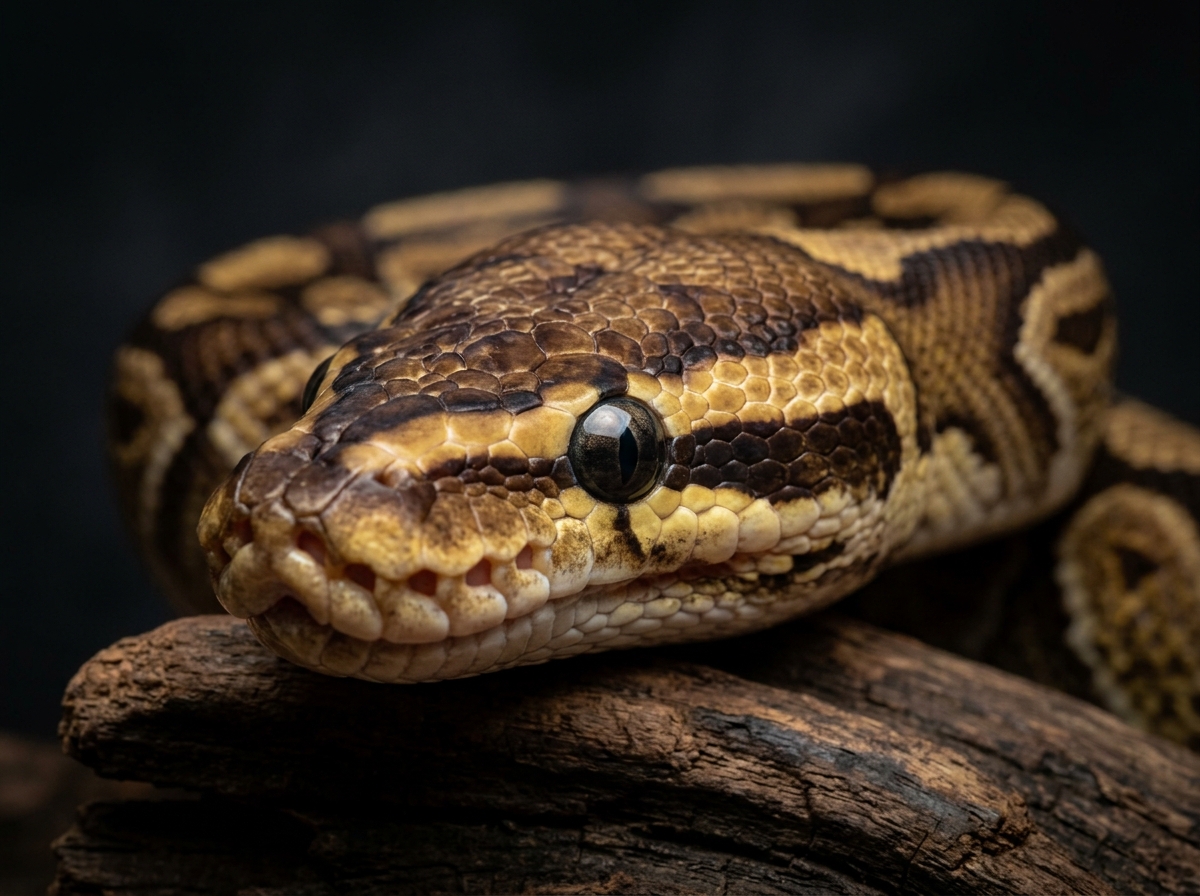
“PET” TRADE MYTH
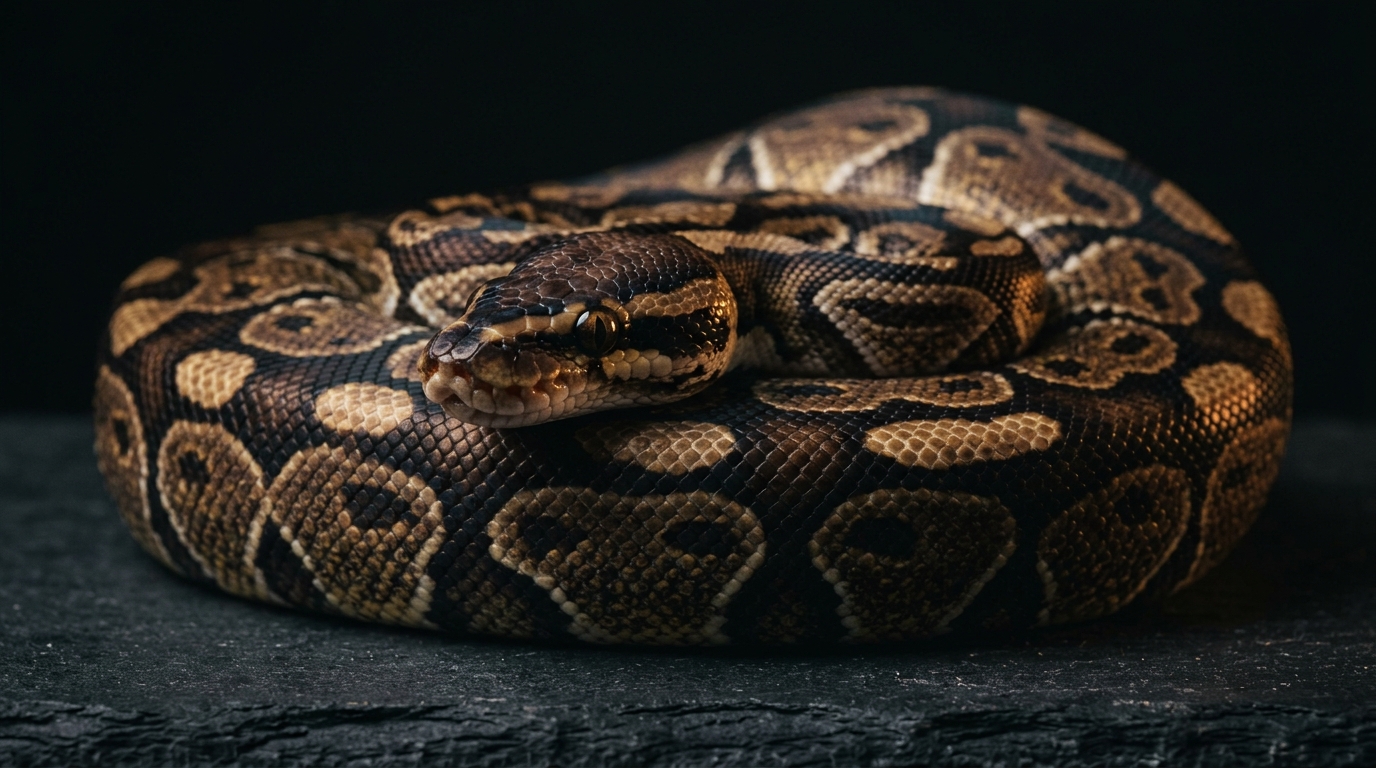
Ball Python
Wild African constrictors sold as beginner snakes. In captivity, they may spend decades curled inside dry glass tanks or plastic drawers.
Reptiles who belong in the wild are routinely kept as pets, where they may be confined to small cages, denied the ability to express natural behaviors, deprived of social interaction, and fed inadequate diets.
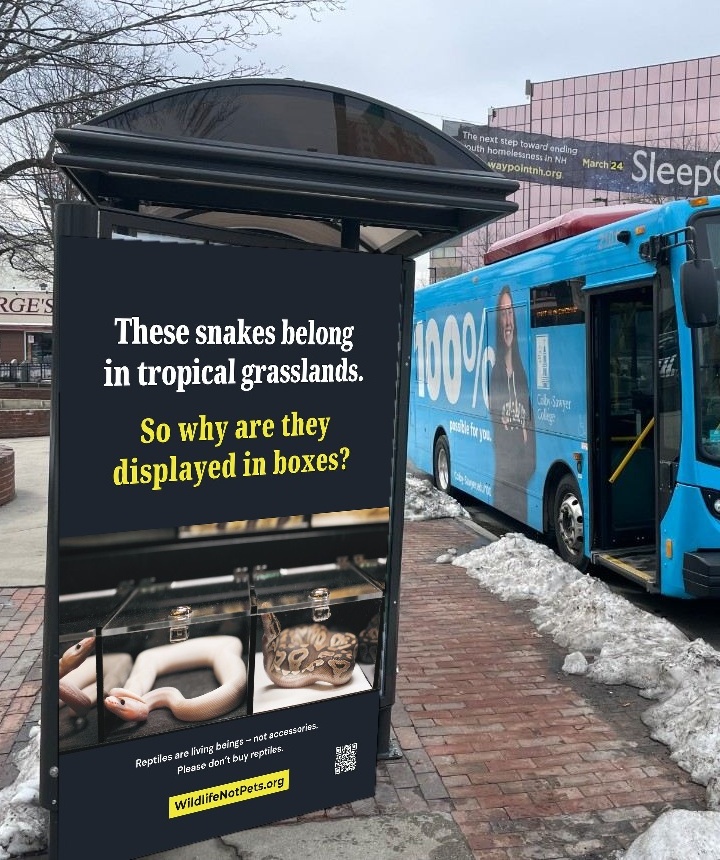
Starting October 19, high-impact educational posters are being installed in select bus shelters across Manchester, New Hampshire. Our mission: expose the cruelty of keeping reptiles as pets and urge the public to keep wildlife wild.
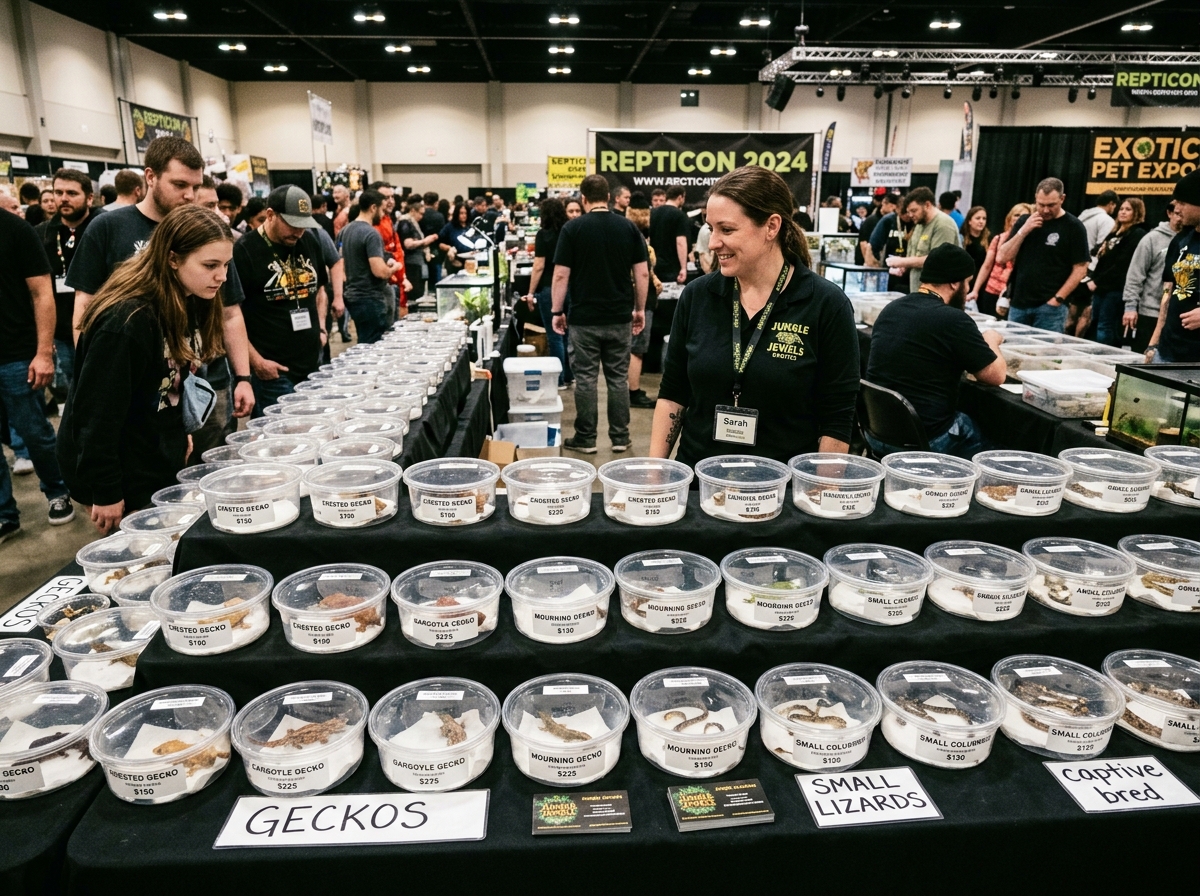
When commercial reptile expos roll into Manchester — such as the recurring expo held at the DoubleTree Hotel — thousands of animals are trucked into the state packed inside small plastic containers and other inadequate enclosures. Many don’t even make it to the show — they die on the road and are just tossed.
Commercial dealers portray reptiles as low-maintenance decorations that thrive in small tanks. Scientific reality proves they are sensitive, non-domesticated wildlife suffering severe chronic trauma when confined.
NATURAL STATE: WILD AUTONOMY
In nature, reptiles utilize vast territories, microclimates, and sunlight cycles essential for psychological and biological health.
Ectothermic reptiles self-regulate body temperature by moving between sunlight and underground burrows, activating digestion and vitamin synthesis.
Snakes and lizards actively forage across many square miles, climb tree canopies, and require full-body stretching to maintain internal organ health.
Reptiles can live for decades — much longer than dogs and cats — and may go through brumation (hibernation) cycles which require specialized care. Buying a reptile is a long-term commitment most consumers are not prepared for.
COMMERCIAL REALITY: CONFINEMENT & NEGLECT
Subjected to commercial rack breeding and traveling expos, wild reptiles may endure acute sensory starvation and premature death.
Commercial breeders house thousands in opaque plastic drawers. At expos, animals sit for days in deli cups without space to uncoil or turn around.
Without linear UVB lighting and proper humidity gradients, lizards develop agonizing bone softening (rubber jaw), fractures, and respiratory rot.
Unwanted turtles, snakes, and other reptiles may be dumped outside where they are unlikely to survive.
Click any case file below to inspect the commercial deception and captive physiological damage.
“PET” TRADE MYTH
Wild African constrictors sold as beginner snakes. In captivity, they may spend decades curled inside dry glass tanks or plastic drawers.
EXPO NOVELTY CASUALTY
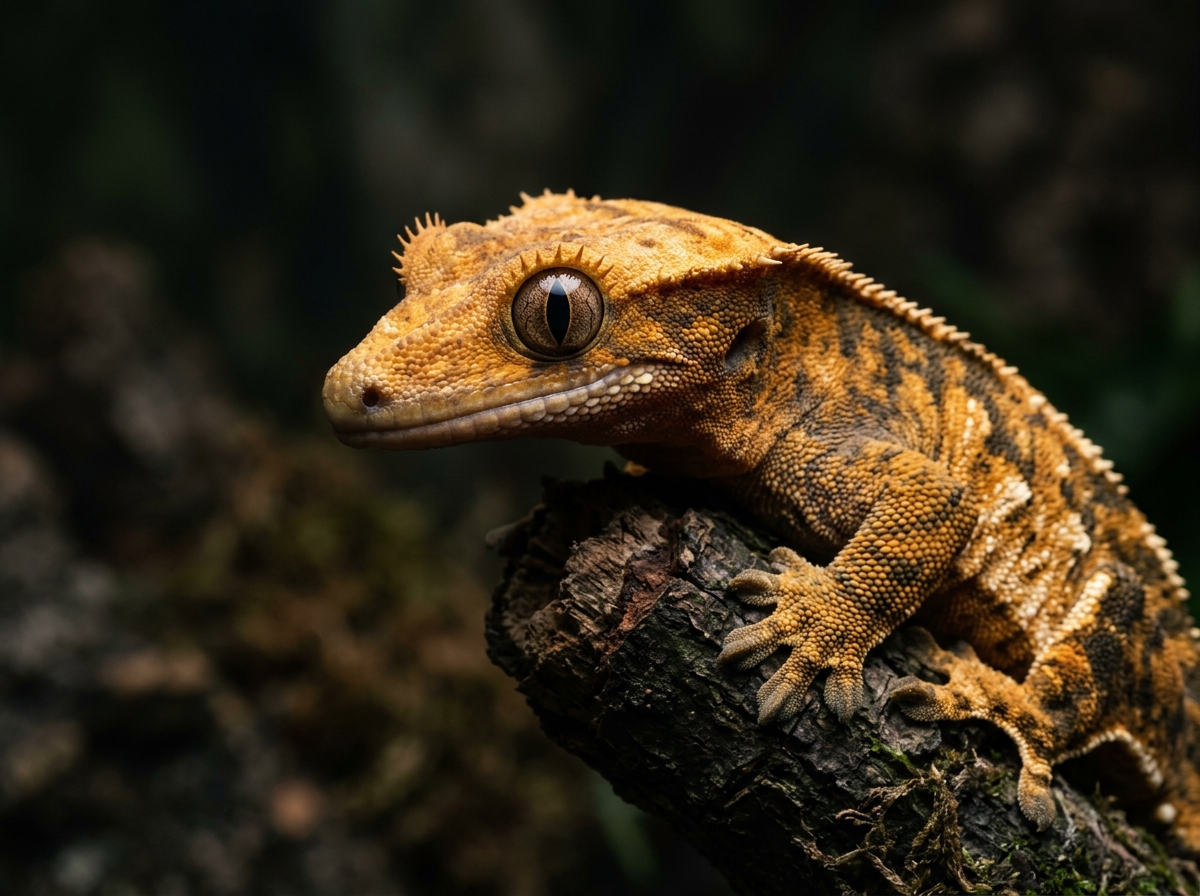
Nocturnal rainforest lizards marketed at expos as cheap children’s toys requiring only powdered food mix and a plastic cup.
MBD & NEGLECT CASUALTY
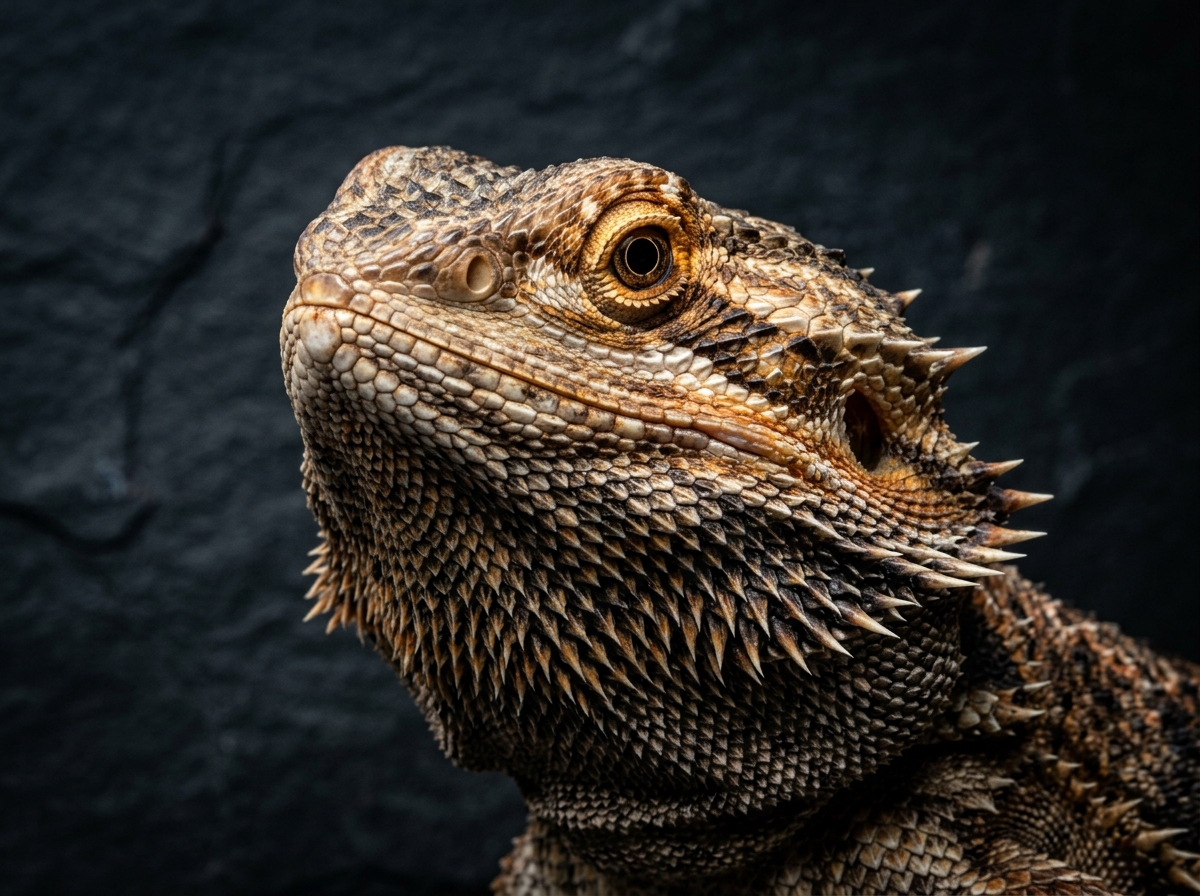
Australian desert reptiles falsely sold as cuddly “lap lizards”. Without costly high-output UVB and gut-loaded diets, their skeletons deform.
FEDERAL 4-INCH BAN
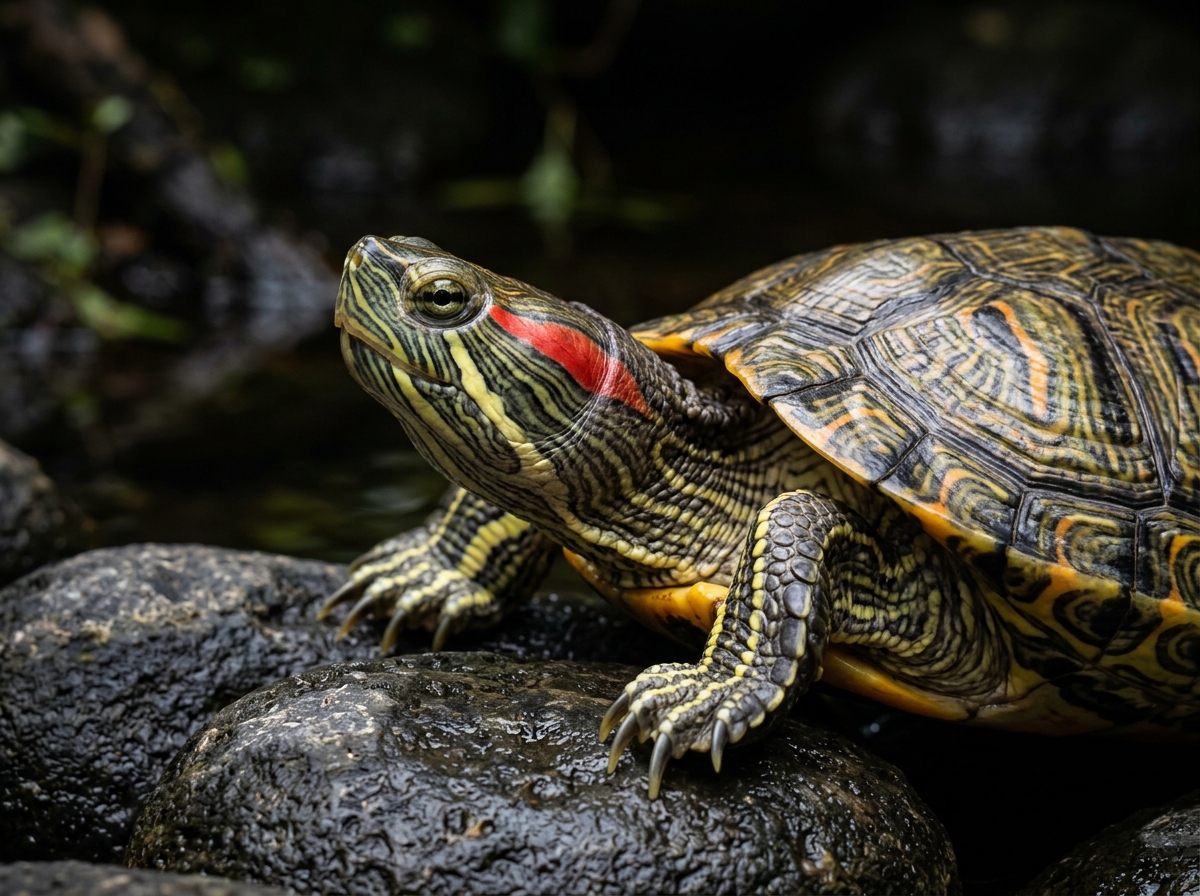
Tiny hatchlings sold illegally at expos rapidly balloon into 12-inch active swimmers requiring 100+ gallon tanks and industrial filtration.
RACK BREEDING VICTIM
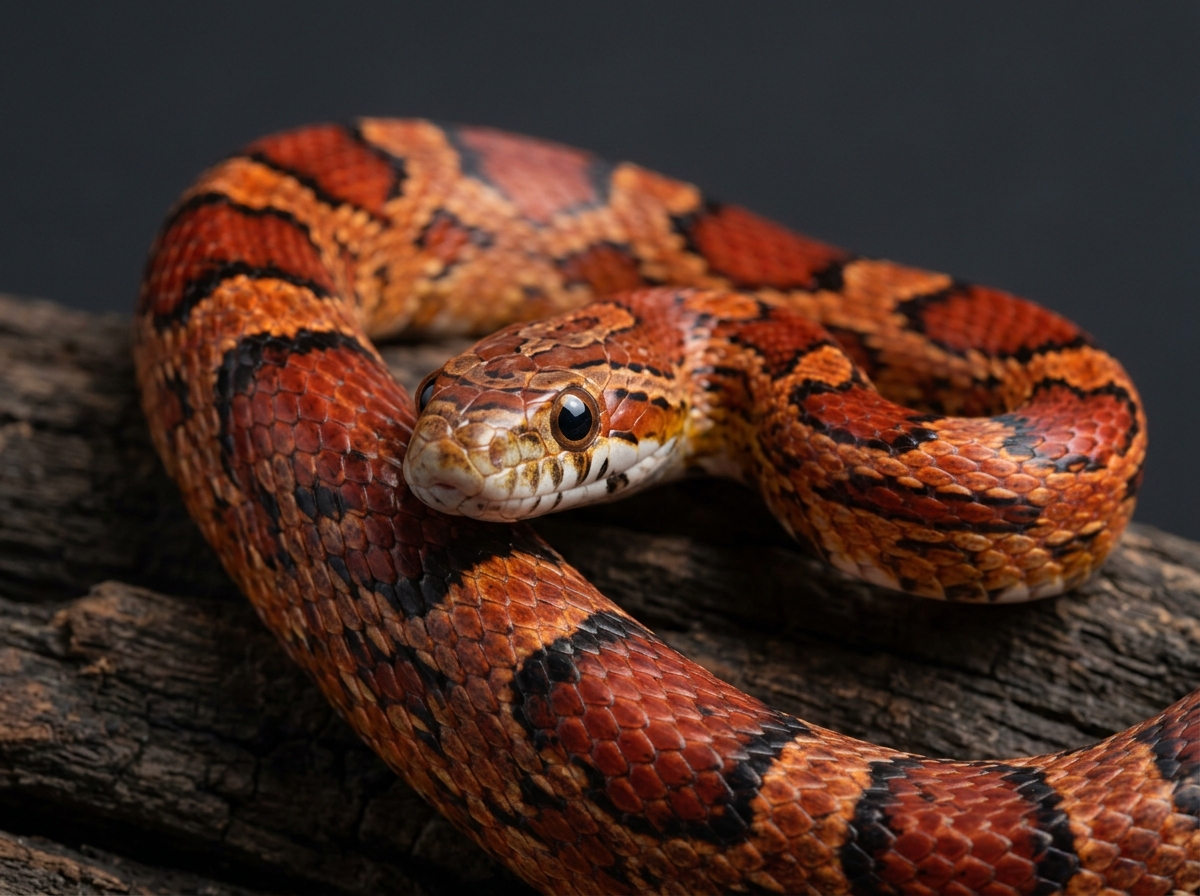
Semi-arboreal North American colubrids mass-bred in commercial mills for designer color morphs. Thousands spend lifetimes in dark plastic shoeboxes.
ACUTE STRESS CASUALTY
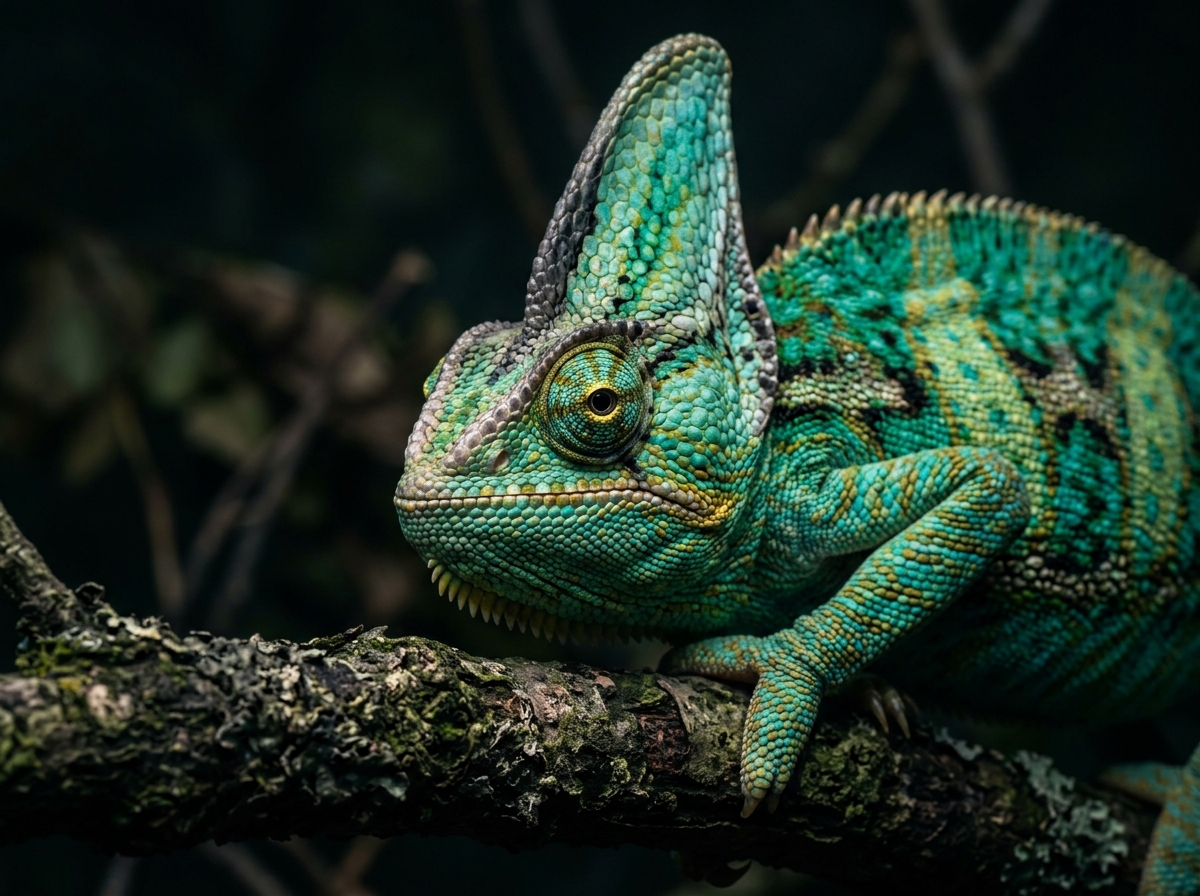
Solitary arboreal lizards purchased for their color-changing displays. Standard glass aquariums cause respiratory infection, stress collapse, and death.
The pet reptile industry conceals true care costs, lifespans, and veterinary hurdles to fuel impulse sales. Use this interactive protocol to see the reality before making an impulse purchase.
Often sold to beginners, a ball python can live for 30 or more years. They require large, temperature-zoned enclosures with high ambient humidity, daily monitoring, and frozen-thawed whole rodent prey.
Promoted at expos as cheap, resilient lizards, crested geckos are delicate nocturnal animals native only to New Caledonia. Handling can cause extreme panic leading to permanent tail autotomy (tail loss).
Federal law (21 CFR 1240.62) has banned the sale of turtles under 4 inches since 1975 due to high Salmonella risks in children. Yet expo dealers routinely bypass laws using “educational display” loopholes.
Traveling reptile shows rely on curiosity and ticket revenue from families. Here is how every Granite Stater can dismantle this trade:
Submitted To: New Hampshire Hotel Venues, Manchester City Council, and NH Fish & Game Commission
I Pledge Never to Attend: I will boycott traveling reptile expos, swap meets, and commercial events that profit from wildlife confinement.
Minimum Length Standards: Demand that state regulators require snake enclosures to allow full-body extension.
Protect Public Health & Wildlife: Enforce mandatory disclosure of CDC Salmonella warnings and help prevent the dumping of exotic species in New Hampshire ecosystems.
Conserve Wildlife & Endangered Species: Work to end all reptile sales, which drive the capture of animals from the wild and threaten the survival of endangered species.
Stand up for reptiles against commercial expo exploitation.
Report sightings of animals dying in plastic cups, illegal turtle sales under 4 inches, exotic animal neglect at expos, or desertion into New Hampshire waters. All submissions are reviewed confidentially.